
Training material shipped on a CD-ROM stays readable only as long as the software that opens it exists, and the format determines whether that software is a browser conforming to public standards or one vendor’s runtime. The difference is invisible at sign-off, when everything runs on the producer’s laptop. It shows up three years later, on a different machine, with an updated operating system and the runtime vendor having meanwhile changed version or shut down.
I worked on producing a teaching CD-ROM on the self-assessment of degree programmes for the Fondazione CRUI (the conference of Italian university rectors), within the work on teaching quality that grew out of the CampusOne project. The content is method material: internal-analysis procedures, indicators, reference sheets for universities. Nothing short-lived. For that very reason, the way it is packaged weighs more than it seems.
Context
In 2006 a «multimedia» CD-ROM is usually assembled with a proprietary authoring tool — Macromedia Director with Shockwave .dcr files, a Flash executable, or a menu compiled by a Windows autorun generator. The result opens cleanly at sign-off and yields a single file that launches on double-click. The cost stays hidden until it shows up: the content is readable only where that player runs, in that version, on that operating system.
For institutional material that must circulate across universities for years, this is where the central problem sits. A university does not run a uniform fleet of machines, and a pressed CD-ROM cannot be touched again: whatever is burned onto it must stay openable, and no update can be shipped.
Architecture
The structure I adopted keeps three layers separate, each anchored to a public specification.
The filesystem is ISO 9660, the ISO standard going back to 1988, freely available as ECMA-119 (https://ecma-international.org/publications-and-standards/standards/ecma-119/). A conforming ISO 9660 disc reads on different systems and architectures. For long, Unicode filenames it adds the Joliet extensions (Microsoft) for Windows and Rock Ridge for POSIX systems: a hybrid disc carries both in one master, so the same file tree reads under Windows, Mac OS X and Linux without making separate copies.
The content is XHTML 1.0 and CSS. XHTML 1.0 is a W3C Recommendation in its second edition of August 2002 (https://www.w3.org/TR/2002/REC-xhtml1-20020801/); for presentation I stay on CSS level 2 — a Recommendation from 1998 — and of CSS 2.1 (still a Working Draft today, last revised June 2005) I take only what browsers implement stably. The pages are static files on disc. Non-linear navigation between sections is a web of relative links: no server, no database, no server-side logic.
The opening is done by a conforming browser. The disc carries no rendering engine of its own: it leans on the one already installed on the machine. On Windows the autorun.inf, per Microsoft’s specification introduced with Windows 95, does not launch an embedded executable but asks the system to open the starting index file with the default handler for HTML. On Mac OS X and Linux there is no autorun, and the entry point stays the same file, opened by hand.
In 2006 the bar for a «conforming browser» has just been raised: Firefox 1.5 ships on 30 November 2005 (https://en.wikipedia.org/wiki/Firefox_version_history) with firmer CSS and DOM support, and on that footing it stands alongside the other engines of the day. Writing verified XHTML/CSS, rather than instructions tailored to a single browser, is what makes the disc openable on more than one machine.
The critical point
Under deadline the temptation is the effect: a transition, an animated menu, a section that behaves «better» inside Flash. Every such element is a piece of content that stops being a file and becomes a behaviour tied to a player. It moves the content from «readable by anything that can interpret the standard» to «readable only by whoever has that runtime in that version».
The rule I followed: no information lives inside a format that needs a proprietary interpreter to be read. Animation and interactivity stay optional ornament; the text, the indicators, the sheets are XHTML served from disc, readable even by opening the raw file. Should the reference browser disappear tomorrow, the content is recovered with a text editor. A .dcr or a .swf does not have this property: the proprietary format is opaque, and once its interpreter no longer runs it cannot be recovered with a common tool.
Implications
For a fixed, non-updatable disc the choice of open standards settles how many years the material stays usable, and it is not a matter of taste. A CRUI CD-ROM on self-assessment is method documentation a university may consult well beyond the year it was pressed. Anchoring it to ISO 9660 and the W3C Recommendations ties it to public specifications, implemented by several independent vendors, that no single company can withdraw.
The cost is paid in production: without the all-in-one visual authoring tool, layout and navigation are built by hand in markup and stylesheets, and showy effects become more laborious. It is a cost concentrated upstream, once, on the producer. The cost of the proprietary runtime is instead spread downstream, across every user and every passing year, and surfaces exactly when nothing can be fixed any more because the disc is already pressed. The production of the CRUI self-assessment CD-ROM, coordinated by Consorzio Quinn, is documented in a noze insight: https://www.noze.it/en/insights/crui-cdrom/.
Limits
Open standards do not guarantee identical rendering everywhere: in 2006 the engines diverge on CSS details, and a page has to be tried on several browsers rather than on one «certified» player. Offline rendering has firm boundaries — no server-side components, full-text search only if a static index is shipped — and for heavy audio and video the dependency on codecs present on the machine remains, another portability problem XHTML does not solve. Finally, «readable in ten years» is a forecast about how browsers will evolve, not a certainty: less so for a public standard with several implementations than for one vendor’s runtime, but a forecast all the same.
https://ecma-international.org/publications-and-standards/standards/ecma-119/ https://www.w3.org/TR/2002/REC-xhtml1-20020801/ https://www.w3.org/TR/CSS21/ https://en.wikipedia.org/wiki/Firefox_version_history https://www.crui.it/
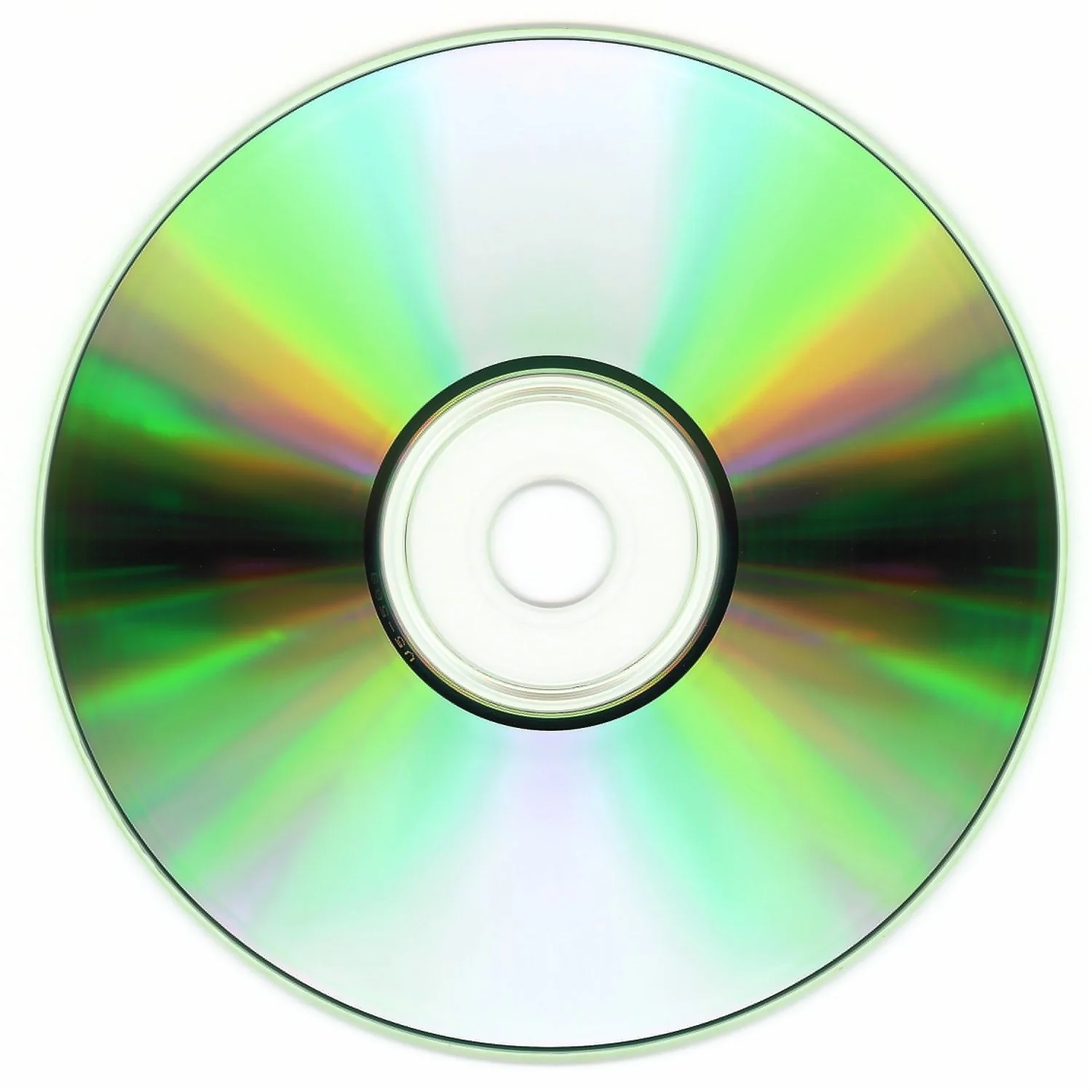
Cover image: Reflective underside of a compact disc showing iridescent rainbow colours from light diffraction, with the central hole and clear… — photo by Arun Kulshreshtha, CC BY-SA 2.5 — https://commons.wikimedia.org/wiki/File:Compact_Disc.jpg