
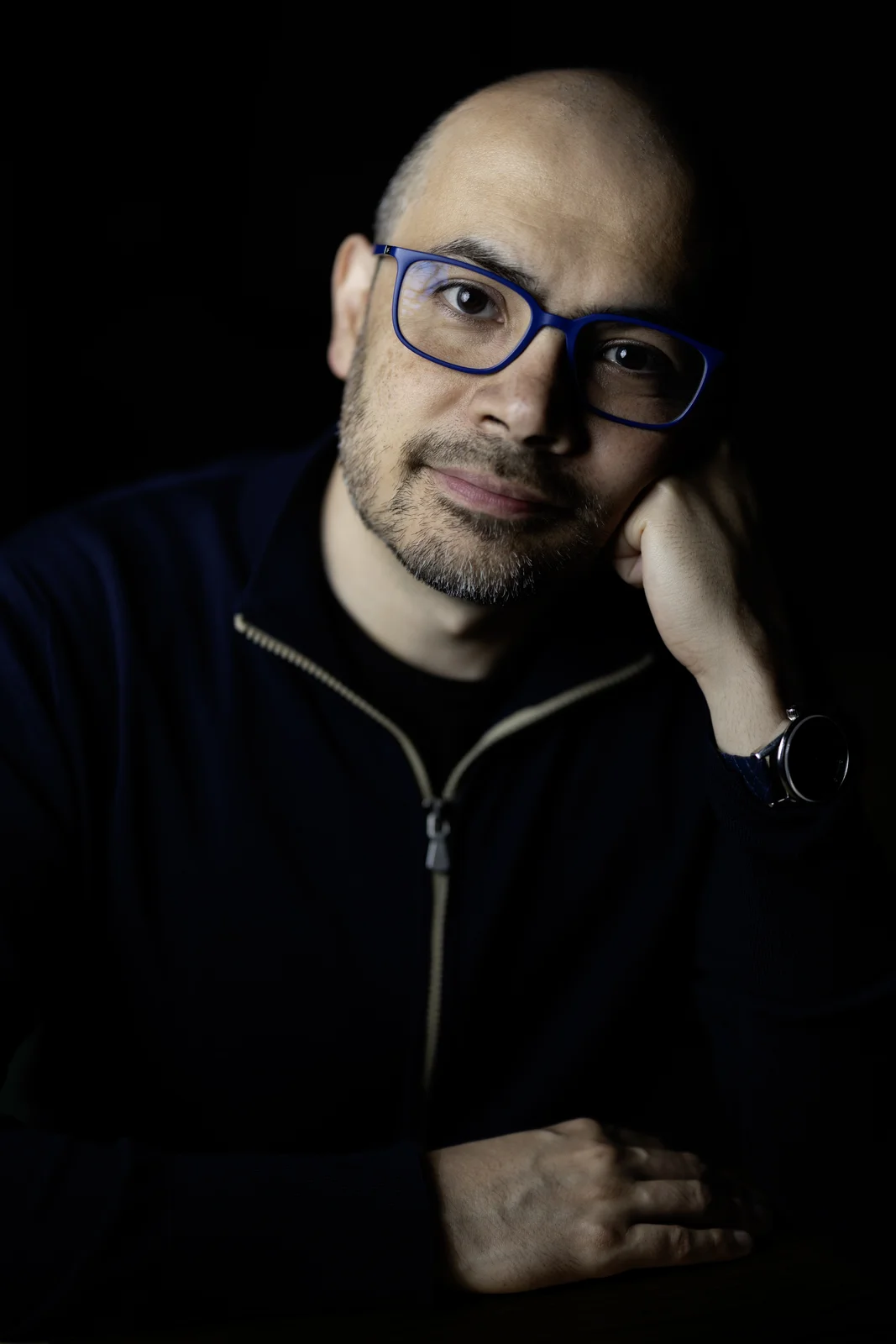
On the morning of 14 July 2026 Demis Hassabis — co-founder and CEO of Google DeepMind, 2024 Nobel laureate in chemistry for AlphaFold — published a long-form article on X, A Framework for Frontier AI and the Dawning of a New Age, which passed one and a half million views within hours. The thesis sits in the opening lines: Artificial General Intelligence (AGI), “a system that exhibits all the cognitive capabilities the brain has”, is “probably only a few short years away”. The comparison he reaches for is not the internet or mobile but “the discovery of electricity or fire”, with an impact “perhaps 10x of the Industrial Revolution at 10x the speed”. From there follows the concrete proposal that fills the rest of the text: a US-led standards body with the power to examine frontier models before release.
What he proposes
The body Hassabis describes is a federally overseen public-private partnership, “modelled on […] a self-regulatory organisation, much like the Financial Industry Regulatory Authority (FINRA)” — the industry-funded watchdog that polices American brokerage firms under SEC oversight. The traits defined in the text and in the interviews published the same day:
- A board including leading independent technical experts and open-source representatives.
- “Substantial” funding, “likely” borne by industry, to attract technical talent and sustain the compute needed for large-scale testing.
- Pre-release review: frontier labs voluntarily share models with the body up to 30 days before release; once the system has proven “effective”, review becomes mandatory for deployment in the US market.
- An exemption for non-frontier models from startups and academic research.
- According to Axios, which ran the first interview, the body should be operational “before year end” and hold the power to coordinate an industry-wide slowdown if dangers mount.
- The framework assumes international extension: analogous frameworks elsewhere and consensus on the critical governance points.
The tests
The most engineering-minded part of the manifesto is the list of what review should check: “specific agentic AI tests could look for attempts to bypass safety guardrails or signs of deception, and ensure best practices, such as digitally watermarking AI-generated images and generating human-readable output tokens to understand model reasoning”. These are observable technical properties — measured on a concrete model, with repeatable protocols — and this is the ground where governance stops being a statement of principles and becomes verifiable architecture, the same stance as the OISG paradigm noze applies to AI systems: https://www.noze.it/insights/open-intelligence-secure-governance/. The risk motivating the urgency is already partly on record: “we’ve already seen the challenges frontier models pose for cybersecurity, and other threats including nuclear and bio risks may soon emerge as capabilities continue to advance”.
The context
The manifesto does not arrive in isolation. A month ago, at a G7 meeting with tech leaders and heads of state — President Trump present — Hassabis and Dario Amodei (Anthropic’s CEO) called for a US-led coalition to shape AI rules and standards; in early July Sam Altman proposed a similar body in a Financial Times article. In the same weeks the administration temporarily imposed export controls on an advanced Anthropic model and initially asked OpenAI to limit the rollout of a new model. In the background, Chinese releases — DeepSeek, Z.ai — judged competitive with leading American frontier systems and gaining adoption among US companies. Hassabis’s structural diagnosis is that the commercial and geopolitical race is pushing capability faster than our understanding of it; the tone, though, remains his own: “nobody in the world knows for sure what is going to happen from here, and even the experts disagree. When there is a large degree of uncertainty and the stakes are this high, proceeding with cautious optimism is the sensible and correct strategy”.
Open points
Four, declared or implicit.
First: this is a personal manifesto, not a legislative text. Who appoints the board, what makes review “effective” enough to become mandatory, what happens to those who do not submit — none of that exists yet.
Second: the FINRA model carries the known criticisms of self-regulation — a body funded by the entities it polices structurally coexists with the risk of capture. The independent-majority board is Hassabis’s answer; the funding remains industrial.
Third: a 30-day pre-release review is designed for closed models served via API. For open-weights releases the line between “sharing for review” and “publication” is thin, and the non-frontier exemption moves the problem onto the threshold separating frontier from non-frontier: who sets it, and how fast it tracks capabilities as they grow.
Fourth: the convergence of interests. DeepMind, Anthropic and OpenAI have all, within a month, asked for a body of this kind — while their models undergo case-by-case government restrictions. A predictable standard is preferable, for them too, to ad-hoc interventions; the proposal deserves assessment on its merits, but the timing is also explained by this.
- https://x.com/demishassabis/status/2076957440109625718
- https://www.axios.com/2026/07/14/demis-hassabis-ai-regulation-google-deepmind
- https://www.cnbc.com/2026/07/14/google-deepmind-demis-hassabis-us-led-ai-standards-body.html
- https://the-decoder.com/deepmind-ceo-hassabis-says-nobody-in-the-world-knows-what-happens-next-so-cautious-optimism-means-building-guardrails-now/
- https://x.com/kimmonismus/status/2076967071032791503
Cover image: Demis Hassabis in 2025 — photo by Christopher Michel, CC BY-SA 4.0 — https://commons.wikimedia.org/wiki/File:Demis_Hassabis_in_2025_by_Christopher_Michel.jpg