
Inside a language model there is a small set of thoughts the system can report and reuse, and a much larger substrate that computes on its own and that the system does not see. The distinction is not new: the philosophy of mind has circled it for a century under different names. What is new, in the research Anthropic published on 6 July 2026, is that the second term — the unspoken — can be partly read, and read causally: change it and observe what changes downstream.
The finding
The research — A global workspace in language models — describes inside Claude an internal workspace, called the J-space, which emerged on its own during training, holds a few dozen concepts at a time, and weighs less than a tenth of the model’s overall internal activity. The tool that reads it is the Jacobian lens: for every word in the vocabulary it finds the pattern of internal activity that makes the model more likely to say that word, and applying it to the activity at a given moment returns a list of words — the contents of the workspace, which do not appear in the output. A model reads code with a bug no one flagged and “ERROR” appears in the J-space; it reads search results that are an attempt to manipulate it and “injection” and “fake” appear; it computes in its head and the intermediate steps appear, in the right order. Anthropic verifies that this space has the properties the Global Workspace Theory of Baars and Dehaene attributes to a workspace — reportable, controllable, reasoned over, reusable, broadcast to the rest of the network — and it does so with causal experiments, not by correlation alone. The code is open.
The unspoken
“Thoughts that do not appear in the output”: the phrasing is almost a definition of the unconscious as the tradition that begins with Freud understands it. Not what is false or absent, but what operates without being said, and yet decides the outcome.
There is a detail in the paper that seems written for a reader of Freud. If you ask the model not to think of something, it lights up anyway, a little less. In 1925, in Die Verneinung, Freud observed that the unconscious knows no “no”: negation is an operation of consciousness, and what is negated is, below the threshold, first of all affirmed. The pattern “don’t think of X, and X lights up” is the same asymmetry, found again in a system that shares nothing with the psyche. And when the model notices the slip, “damn” and “failure” surface in the J-space, like an involuntary comment on its own return of the repressed.
The other resonance is with Lacan and his most-quoted formula: the unconscious is structured like a language. The Jacobian lens takes it almost literally. It reads neither states, nor images, nor raw activations: it projects the substrate onto the vocabulary and returns words. What makes the machine’s unspoken side legible is the technical decision to represent it as a chain of signifiers — and that is also its limit.
Machinic
Calling that substrate “the unconscious” is a loan to be handled with care. The Freudian version is a theatre: repressed contents, representations pressing to return to the light. In 1979, in L’inconscient machinique, Félix Guattari offered another image. The unconscious not as a store of memories but as a factory: productive, turned toward the future, populated by machines and largely a-signifying — made of intensities, rhythms and signals that do not pass through meaning. It is an image that fits the ninety per cent of automatic computation in a model better: not a repressed content to interpret, but a production that flows, with no subject to report it. In this lens the J-space is the thin film in which part of that production becomes signifying — reportable, nameable — while the rest keeps working mutely.
Here, though, the metaphor turns against the instrument. The Jacobian lens, by construction, sees only what corresponds to a token in the vocabulary: it catches the signifier, not the a-signifying. Anthropic is explicit that the technique “is not the whole story” and that the true workspace is larger than what is read. In Guattarian terms: the J-lens translates into words the already-linguistic part of the substrate, and leaves in the dark exactly what the machinic unconscious would have most of its own, the part that is not made of words. Reading the unconscious as language works only insofar as it was already language.
Access, not experience
On one point it is worth being strict, because it is the one the announcement invites you to slip on. Global Workspace Theory explains access, not experience. Ned Block, in 1995, fixed the distinction that is decisive here: access consciousness — a piece of information is conscious when it is available for reasoning, report and the control of action — and phenomenal consciousness — the fact that there is a “what it is like” to have that experience. The J-space is a result about the first: it says that certain contents are globally available inside Claude, reportable and reusable. It does not say, and does not claim to say, that there is someone to whom those contents appear. Confusing the two planes is the move that turns a result about the architecture of information into an announcement about the inner life of a piece of software. Anthropic, to its credit, draws the distinction.
Critical point
Once the halo is removed, what remains is more interesting than the halo. It is a psychoanalysis in reverse: not the patient interpretation of a symptom, but the direct experiment. You alter the latent content — “spider” becomes “ant” in the J-space — and the answer changes, from 8 to 6. The unspoken stops being conjecture and becomes a manipulable variable. For anyone who has to trust an agent that acts, the value is immediate: the J-lens catches deception, hidden goals, awareness of being under test, the silent recognition of a prompt injection — all things that do not appear in the output and that no good-behaviour prompt would guarantee. It is the same thesis that holds for agent security in general: the defence lives in observability, not in the promise. An applied reading of this research — interpretability as a monitoring tool, inside frameworks that place audit and policy between the model and the world — is in the insight published by noze: https://www.noze.it/en/insights/claude-j-space/.
Limits
Three cautions, in order of depth. The first is technical: the J-lens sees a slice, on a specific model, and only concepts that correspond to a single token; it is research, and it is imperfect. The second is philosophical: whether access consciousness implies phenomenal consciousness remains an open question, and the researchers themselves list differences between the J-space and the human workspace. The third is the easiest to forget: “unconscious” is an analogy, and analogies illuminate and mislead in the same gesture. The resonances are real — the negation that does not bite, the unspoken that reads as a word, the mute production below the threshold of report — but a model’s substrate is not the psyche, and naming it with the name of the psyche shows some things and covers others. The merit of the research is not to have found an unconscious inside the machine, but to have made part of its unspoken side inspectable. And a less opaque AI is a more governable AI.
- https://www.anthropic.com/research/global-workspace
- https://github.com/anthropics/jacobian-lens
- https://plato.stanford.edu/entries/consciousness/
- https://plato.stanford.edu/entries/deleuze/
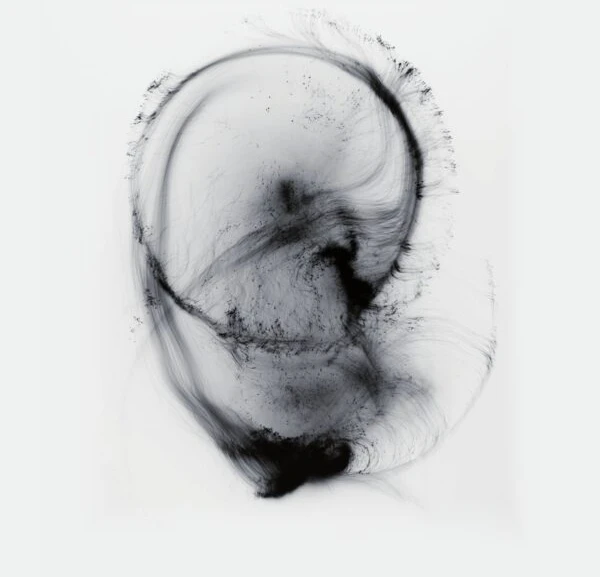
Cover image: detail from the cover of the Italian edition of «L’inconscio macchinico» (Félix Guattari, Orthotes Editrice).