
On 15 May 2026 — the 135th anniversary of Leo XIII’s Rerum Novarum — Leo XIV signed Magnifica Humanitas, an encyclical «on the safeguarding of the human person in the age of artificial intelligence». Setting aside the theological frame, the document names, precisely, the structural problem anyone working on AI governance runs into: technological power today is, in practice, private, and the instruments to govern it remain, for the most part, not required. (English renderings of the encyclical’s quotations are mine, from the Italian original.)
Before the substance, a political observation. That in 2026 the sharpest description of this shift in power comes from an encyclical rather than from a parliament says something about the state of politics. There is nothing in the document a legislator could not have written on their own: it records that decisions affecting everyone are being taken by parties nobody elected, and asks that they be brought back inside a public perimeter. It is a question of legitimacy before it is a question of technology, and in recent years the institutions with the mandate to raise it have raised it rarely.
The social half is closer to my own work. When the text places algorithms, platforms and data among the goods universally destined for all, it is saying that access to these systems is a matter of citizenship rather than of the market. In healthcare this shows up immediately: a model that stratifies a clinical risk acts on people who did not choose that model, who often do not know it exists, and who have nowhere to contest it. The gap between the included and the excluded in §67 is measured there in concrete things, namely the difference between a health system that adopts those tools against verifiable criteria and one that adopts them because they are cheap.
The document
Magnifica Humanitas treats artificial intelligence as an ethical, social and political question at once. It records the context up front: «Negli ultimi anni è divenuto sempre più evidente quanto rapidamente e profondamente la digitalizzazione, l’intelligenza artificiale (IA) e la robotica stiano trasformando il nostro mondo» — in recent years it has become increasingly clear how rapidly and deeply digitalisation, artificial intelligence and robotics are transforming the world (§4). The part that matters for anyone designing systems is the social-doctrine chapter, where the text moves from diagnosis to mechanisms.
A «predominantly private» power
«Once it was mainly States that guided and directed innovation. Today, instead, the main drivers of development are private actors, often transnational, with resources and capacity for intervention greater than those of many governments» (§5). Hence the phrase that names the problem, in the Italian original: «Il potere tecnologico assume così un volto inedito, prevalentemente “privato”, e per questo ancora più difficile da discernere, governare e orientare al bene comune» — technological power takes on an unprecedented, predominantly “private” character, harder to discern, govern and orient towards the common good.
It is an accurate description of the present. The substantive regulation of AI systems is today written, in large part, by those who build them: model cards, internal red-teams, voluntary commitments, release policies decided by the labs. Politics has set high-level principles — the EU AI Act, NIS2 — and delegated the translation into verifiable controls to the operators. The encyclical asks for the opposite: «adequate regulatory instruments must be adopted, capable of protecting justice and containing the distorting effects of technological power» (§5).
Algorithms and data as goods to be shared
The text places technologies among the goods of universal destination: «among the goods that are universally destined for all, we must now also count the new forms of property: patents, algorithms, digital platforms, technological infrastructures, data» (§67). Their concentration «in the hands of a few» produces «a new imbalance that contradicts the universal destination of goods and widens the gap between the included and the excluded».
Subsidiarity applied to algorithms
The most operational passage is §71. Subsidiarity is reread for digital transformation: «here the higher level is not the State, but every large economic and technological actor that exercises real power over the conditions of common life». The text then lists the mechanisms required: independent verification, transparency on algorithms, fair access to data, means of redress (in the original: verifiche indipendenti, trasparenza sugli algoritmi, accesso equo ai dati, strumenti di ricorso).
The technical quality of that list is worth pausing on. The four mechanisms close the full loop of an audit regime: independent verification moves the check outside whoever builds the system, transparency on algorithms makes the system inspectable, access to data gives the checker the material to exercise the check on, and redress attaches a consequence when the check finds something. Remove any one of them and the other three hollow out: transparency without independent verification is self-certification, verification without access to data is a signature on material chosen by the audited party, and a finding without redress obliges nobody. A document that uses no technical vocabulary arrives at the same list that someone designing control systems would write.
These four mechanisms are, almost word for word, the criteria of verifiable governance. Independent verification and algorithmic transparency are what the Open pillar of OISG (oisg.ai) measures as the fraction of components auditable by independent third parties without proprietary access. Means of redress and immutable evidence are the Governed domain. The EU AI Act sets analogous obligations for high-risk systems (Article 6) but leaves the burden of proof with the operator — the same gap that Admina (admina.org) tries to close with forensic logs and a verifiable black box.
The limit of self-regulation
The chapter closes plainly: «a few actors cannot be left to steer the processes on their own; forms of cooperation must be built that respect the different levels of the world community and make them co-responsible for the common good» (§72). This is the structural limit of corporate self-regulation: whoever measures itself does not produce independent evidence.
The problem worsens as system development accelerates. If verification is the role left to humans as AI builds itself, it has to rest on instruments that are still, in large part, to be built.
The technical side of this list is largely solved: we know how to build independent verification, measurable transparency on algorithms, immutable forensic records. What is missing is the mandate: almost none of these properties is currently required by law at scale, and where it is not required it stays optional. An encyclical that describes the void left by politics is an unusual document to cite in a technical article; I cite it because the list of mechanisms is right.
- The full text of the encyclical on the Holy See’s site, in Italian — https://www.vatican.va/content/leo-xiv/it/encyclicals/documents/20260515-magnifica-humanitas.html
- OISG, the verifiable governance paradigm — https://oisg.ai/
- The EU AI Act text with article-by-article navigation — https://artificialintelligenceact.eu/
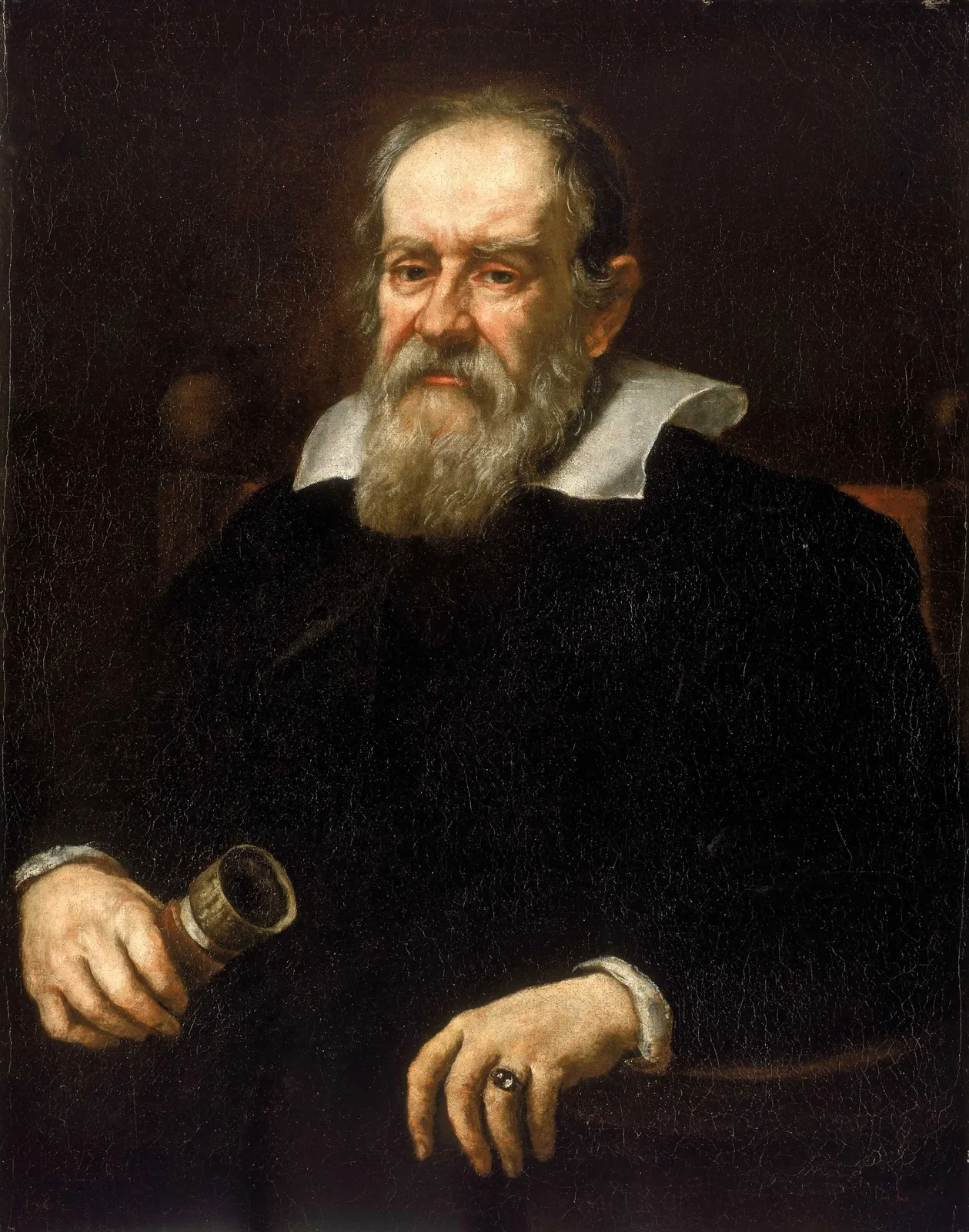
Cover image: Portrait of Galileo Galilei — Justus Sustermans, 1636 (public domain), via Wikimedia Commons.