The Riemann hypothesis proved with AI

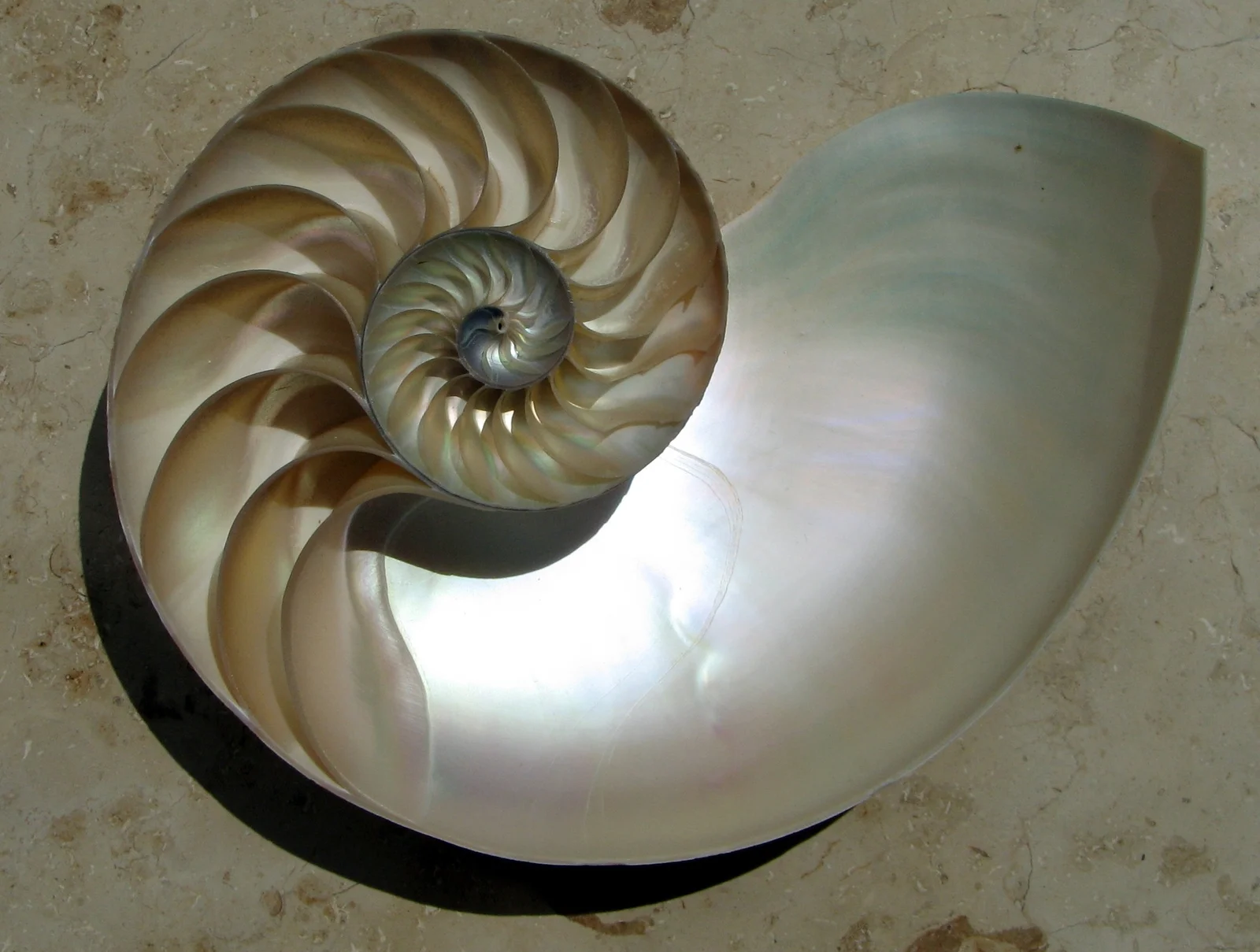
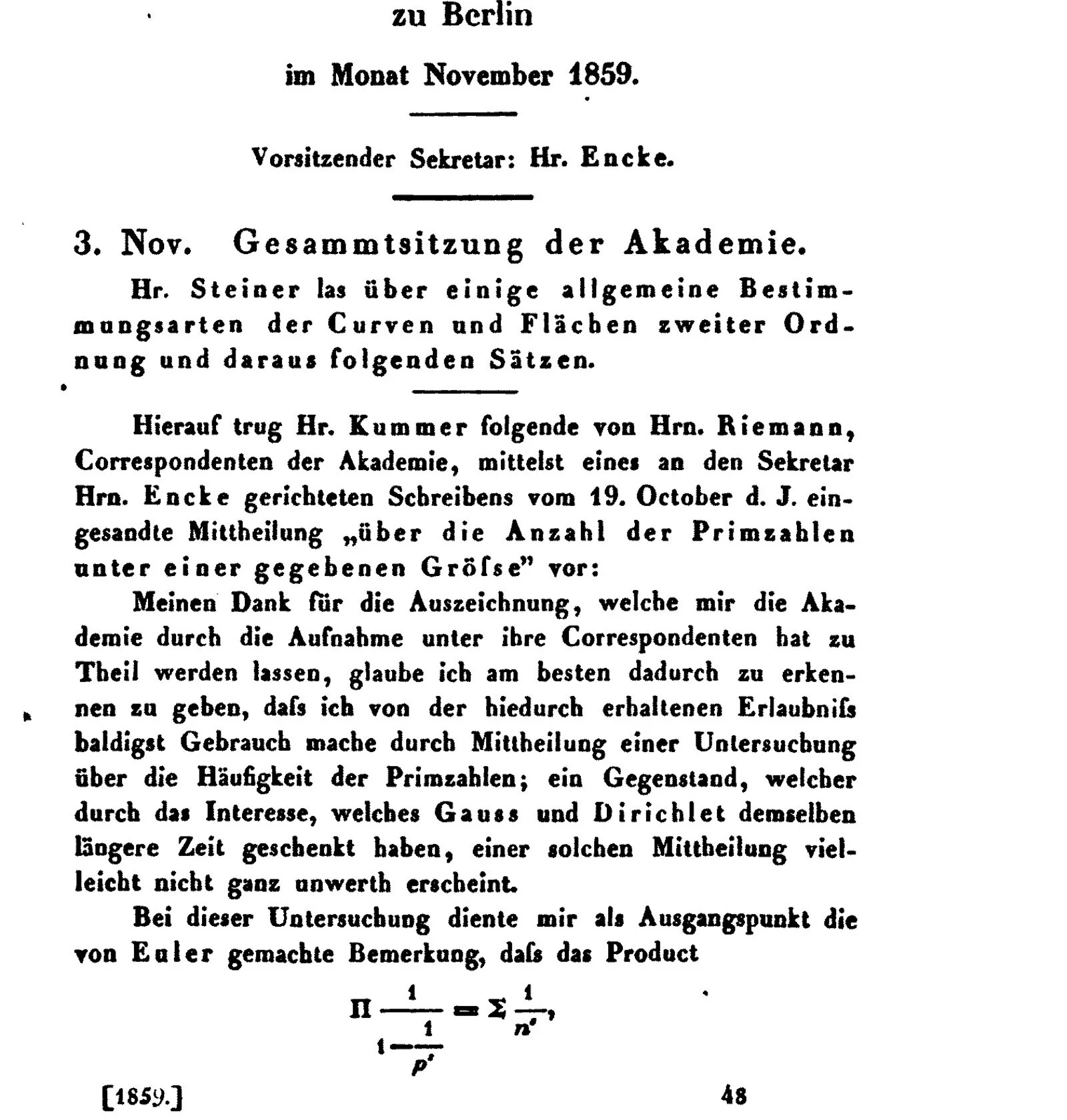
On 20 November Levent Alpöge announced that, working with Claude, he had proved the Riemann hypothesis, released only as a Lean formalisation, which mathematicians are still checking. What the hypothesis says, who tried before, Fibonacci and spirals, primes as a language and why mathematics is accelerating.

Read more

Archaeologist agents

On 10 November 2026 Pietro Miotti described how 48 AI agents found an unregistered Maya settlement in NASA lidar data. The next day the site turned out to be already described in a 2025 study. How the agents worked, where verification gave way, what links them to Stephens, Catherwood and Schliemann, and why the same capability cuts both ways.

Read more

Models that read and write neural network weights directly

On 2 November 2026 a group at MIT CSAIL showed that a frontier model can read the weights of a neural network, fix them and write new ones without gradients or training. On Qwen3.5-0.8B an edit to 0.016% of the weights takes MATH-500 from 7.9% to 48.1%. What was measured, where the method stops and what it changes for model governance.

Read more

The dawn of a new mathematics?

On 29 October 2026 Atoosa Kasirzadeh proposed in Noema a different way to measure progress in mathematics, now that AI models are solving the problems on the list one after another. Two models of progress, Dantzig and Wiener as examples, four fields that need mathematicians and a question that also holds outside mathematics.

Read more

The exponentials we cannot see

On 26 October 2026 OpenAI announced an algorithm that counts the solutions of any k-CNF formula in subexponential time: if independent verification confirms it, it refutes the Exponential Time Hypothesis, on which hundreds of complexity results rest. The same announcement brings the local smoothing conjecture in every dimension and a rigorous existence proof for QCD. Exponentials remain hard for people to grasp, even though we are the product of very fast growth processes.

Read more

Is the world we knew really over?

On 6 October 2026 OpenAI published 722 mathematics manuscripts produced by an internal model, including claimed proofs of the Unique Games Conjecture and of a weak form of the Riemann hypothesis, with Lean formalisations for 235 of 372 families. For mathematics as the production of proofs, a phase is closing. For the rest of the world, the consequences travel by slower roads.

Read more

AI is already building the AI that comes next

On 28 September 2026 twenty-two researchers, including Geoffrey Hinton, Yoshua Bengio, OpenAI's chief scientist and an Anthropic co-founder, published a Cambridge paper on an intelligence explosion triggered by the automation of AI research. What it argues and why the premise of its "what if" is already a measurement.

Read more

A new family of enzymes found by agents reading DNA

On 23 September 2026 Anthropic published the preprint of an autonomous agent campaign that swept 1.9 billion protein clusters in twenty-one and a half hours and isolated ART, a family of phage reverse transcriptases with a run of non-coding repeats beside it. How the campaign is built, how well it holds up when repeated, and what still has to be settled at the bench.

Read more

Ten proofs and the program that checks them

On 1 August 2026 OpenAI published 249 pages with ten results in mathematics and theoretical computer science, together with a repository holding a formal Lean 4 proof for each main result. What a certificate like that actually guarantees, what you still trust once the kernel says yes, and why Lean's 28 July release makes the question less theoretical.

Read more

The machinic unconscious, taken literally: reading a language model's unspoken thoughts

Anthropic's research on the global workspace of language models gives a causal handle on a distinction philosophy has circled for a century: between the thoughts a system can report and the vast automatic substrate it cannot see. Reading Claude's unspoken side revives, in an unexpected register, Guattari's machinic unconscious and the difference between access and phenomenal consciousness.

Read more